Drawing-Based Configuration
Heater type, duty, layout, mounting position, bracket or guard, and service access reviewed around the customer design.
East Thermal Tech
Drawing-built heating packages for OEM cabinets, AHUs and data center support equipment. Anti-condensation, frost prevention and low-temperature protection.
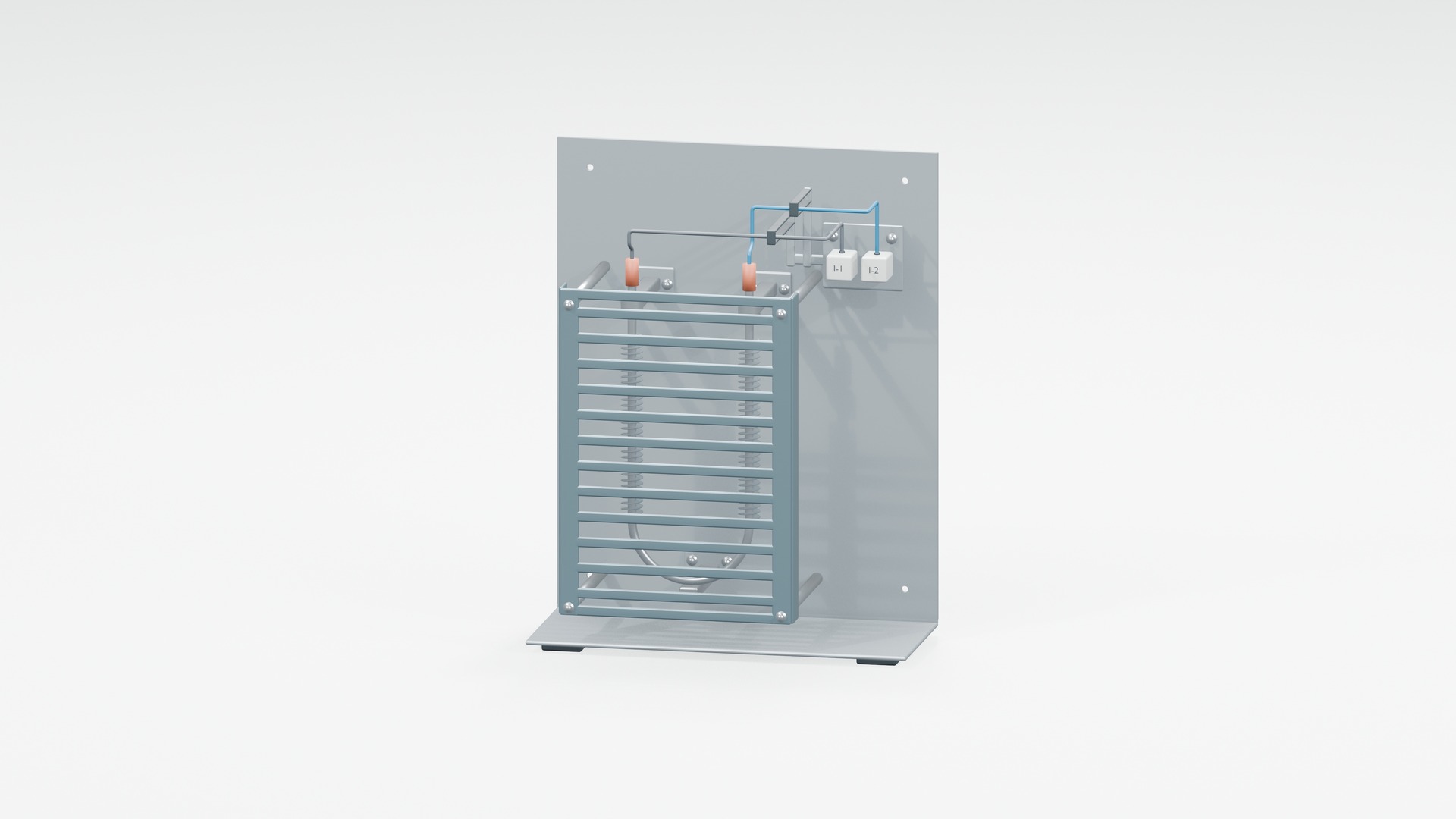
3D concept, not a delivered project. Final assembly is project-specific.
A practical fit for OEM teams that own the equipment or cabinet design and need a buildable heater subassembly around space, voltage, operating conditions, and downstream controls.
East Thermal Tech focuses on the heater subassembly inside customer-designed equipment. We work from drawings, internal photos, or a sample cabinet while the OEM retains the controller and final equipment integration.
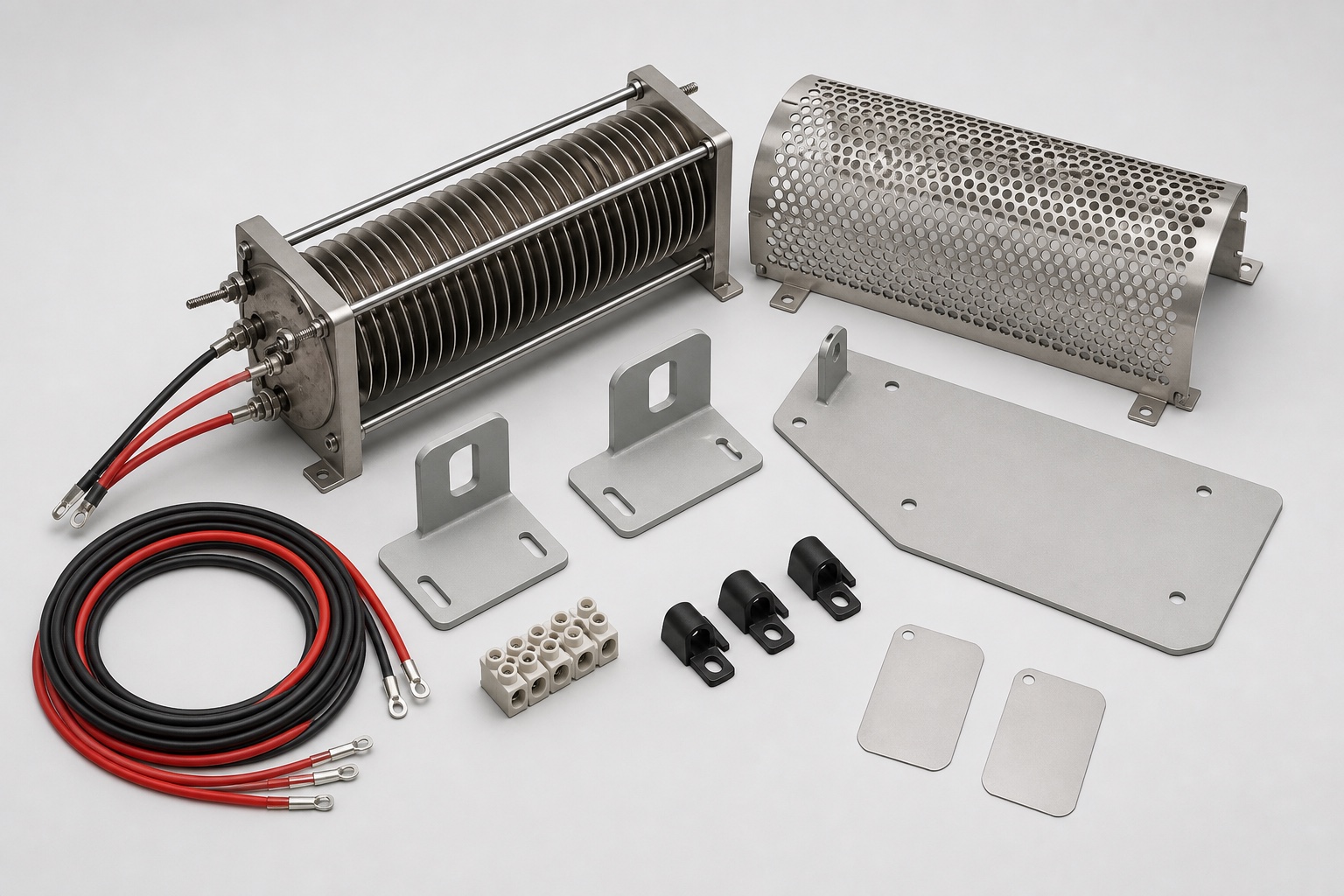
Heater type, duty, layout, mounting position, bracket or guard, and service access reviewed around the customer design.
Heater, supports, internal leads, labels, and terminal handoff can be prepared as a coordinated package for prototype or repeat builds.
Wire route, terminal location, and thermostat or sensor position can be reserved for the customer's downstream controller.
See how a heating assembly can fit into a customer-supplied cabinet: mounting brackets, heater, guard, routed leads, and defined terminal handoff points.
Send a cabinet drawing or internal photo with voltage, operating conditions, target temperature, and expected quantity. We supply heating assemblies, not complete control systems, liquid cooling systems, or MEP works.
Review the component package and the boundary between heating assembly and downstream controls.
Used where OEM equipment needs electric reheat, preheat, anti-condensation, frost prevention, or minimum-temperature support around a defined mechanical and electrical layout.
Project-specific preheat, reheat, freeze-protection, and control-enclosure heater assemblies.
Heating packages to reduce condensation risk in enclosed electrical spaces.
Cold-weather and frost-prevention support for exposed cabinet locations.
Heating assemblies for PDU, RPP, UPS, switchgear-related, and support cabinets.
Humidity, condensation, and low-temperature support for network and edge sites.
Minimum temperature maintenance for standby power and outdoor control enclosures.
Start with the available drawing and application. A sample cabinet shipment follows an agreed assembly proposal, not the first inquiry.
Cabinet drawings, photos, voltage, ambient temperature range, target internal temperature, and application background.
Initial heater type, layout direction, mounting position, bracket or guard needs, and wiring route.
Heating components, mounting approach, terminal reservation, and assembly notes for customer review.
A sample build can be planned around your supplied cabinet, prototype enclosure, or cabinet mock-up.
Feedback from installation, space, wiring, service access, and downstream control integration is reviewed.
After confirmation, the heating assembly package can be prepared for repeat cabinet production.
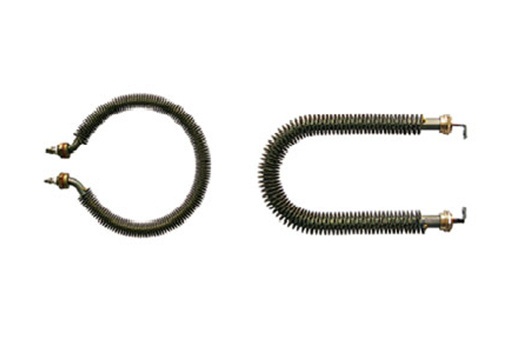
Reference product only. The heater configuration is selected after project review.
The assembly is planned as a practical package of heater module, mechanical support, wiring route, and handoff point for the customer's downstream control system.
Final heater rating, material, mounting method, wiring, labeling, and certification scope are confirmed per project after cabinet drawings and operating conditions are reviewed.
| Voltage | Project-specific; phase and frequency should be provided during RFQ review. |
|---|---|
| Heater wattage | Confirmed by cabinet volume, ambient temperature, target internal temperature, and mounting space. |
| Heater type | Finned tubular, tubular, or compact air-side heater depending on layout and service conditions. |
| Mounting | Bracket, guard, mounting plate, base, side wall, or other project-specific support. |
| Wiring | Wire length, exit direction, terminal reservation, labels, and wiring handoff notes. |
| Controls | Thermostat or sensor mounting position can be reserved for the customer's downstream controller. |
| Documentation | BOM, assembly photo, wiring handoff note, and inspection checklist can be prepared per order. |
A simple responsibility split helps engineering and sourcing teams evaluate the heater package without confusing it with the complete equipment or control scope.
This is a heating-assembly offer, not liquid cooling, full MEP, or a complete control system. Certification scope is confirmed against the exact project and order.
The practical questions behind a custom heating assembly, before a sample or production order.
Yes. Share the application and the drawing or internal photo you have. Available space, supply voltage, ambient conditions and the required temperature are the next review inputs. Unknown items can be marked "to be confirmed".
Yes. A customer-supplied cabinet can be the basis for heating-system assembly. Mounting locations, incoming cabinet condition, delivery arrangements and the control handoff should be agreed before shipment.
Cabinet dimensions, heat loss, ventilation or airflow, ambient conditions, target temperature and available mounting space inform the review. A concept image is not a wattage calculation or a validated safety design. Protective measures and the customer's control interface must be defined for the exact assembly.
Both require project confirmation. Include the prototype quantity, expected repeat quantity and required date in your inquiry; the assembly scope and component availability need to be reviewed before a quotation or delivery commitment.
Do not assume a certification applies to a custom assembly. Specify the destination market and required approvals before quotation. Heater-component documentation, assembly-level requirements and final equipment approval must be checked separately against the exact project and order.
Begin with a non-confidential description or a redacted layout. Request an NDA before sharing proprietary drawings. The contracting entity, NDA terms and manufacturing arrangement must be confirmed before confidential documents or an order are exchanged.
Share the application and what the heater needs to achieve. Attach a non-confidential drawing or photo to your email; detailed specifications can follow.
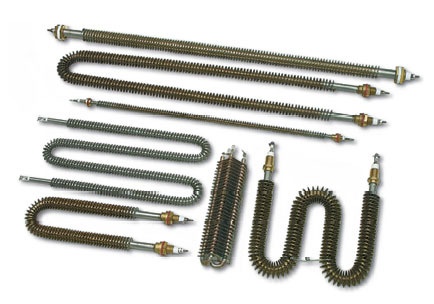
A practical OEM handoff starts with the drawing and heater package, then the mounting and wiring details. Confirm the prototype before repeat production, with the required deliverables agreed in the order.
Product and concept images are reference examples. Final assembly, labeling, documentation, and certification scope are confirmed per project.
Share your cabinet drawing, voltage, ambient temperature range, target internal temperature, and wiring requirements. We will review the heating assembly approach and reply with the next technical questions.